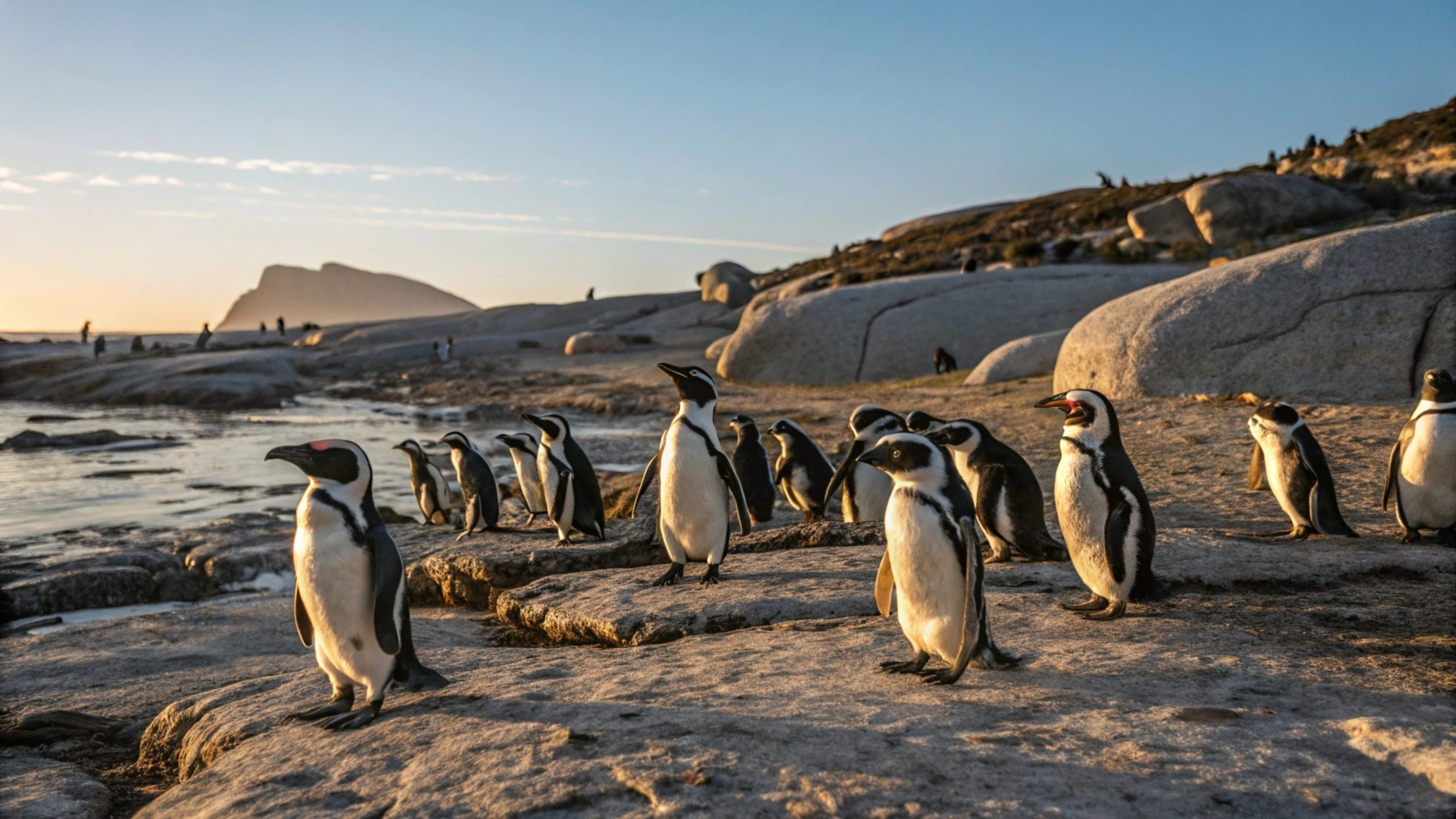

While most international tourists crowd around Boulders Beach in Cape Town to see marine life, local travellers in the know head straight to the rugged shores of Betty’s Bay. The Stoney Point Penguin Colony offers a much quieter, more intimate, and eco-friendly way to observe one of Africa’s most endangered seabirds.
Occupying the site of an old, abandoned whaling station, the colony has been successfully reclaimed by nature. A network of raised wooden boardwalks allows visitors to walk directly through the breeding grounds of the African penguin without disrupting their daily routines.
An intimate wildlife encounter
The unique layout of the boardwalks means you can get incredibly close to the nests, watching parents care for their chicks or guide them down to the water’s edge. Because the site attracts fewer large tour buses, the experience feels authentic and deeply respectful of the birds.
The penguins share this rocky sanctuary with three distinct species of cormorants, as well as playful Cape fur seals that occasionally frolic in the shallow kelp forests just off the rocks. It is a bustling, noisy, and highly entertaining marine hub.
Preserving a fragile ecosystem
The raised boardwalks serve a critical purpose beyond tourism. They prevent visitors from trampling the fragile dune vegetation and crushing underground burrows, ensuring the colony has a safe space to grow.
- Early mornings and late afternoons offer the best times to see the penguins returning from hunting.
- An informative local eco-centre provides excellent context on the conservation struggles of the species.
- Dassies (rock hyraxes) run along the rocks alongside the penguins, adding to the charm.
The smarter choice for travellers
Choosing Stoney Point over busier city colonies means supporting local community-led conservation efforts. The entry fees go directly into managing the site, giving travellers a direct hand in protecting this remarkable coastal sanctuary.